skip to main | skip to sidebar
  • Home
  • Personal hygiene
  • Hygiene Aspect of Food Premises

The Sous Chefs

We, the sous chefs, are here to help out!
Showing posts with label Personal Hygiene. Show all posts

Personal Hygiene: Hand Washing

4:35 PM | Publish by Unknown

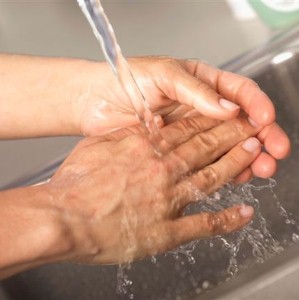
Hand washing is a very important practice of personal hygiene for preventing food poisoning and illnesses.
Improper hand washing technique may result in the spread of microorganisms from our hands to ready-to-eat food. Thus as a chef, one of our first lessons is to learn how to wash your hands.

How To Wash Your Hands?

Step 1: wet your hands with water
Step 2: sufficiently soap your hands

Step 3: scrub your palms together

Step 4: scrub in between your fingers

 Step 5: scrub the back of your fingers

Step 6: scrub your thumb

Step 7: scrub your finger nails

Step 8: scrub your wrists

Step 9: thoroughly rinse off the soap with water

Step 10: dry your hands with paper towel


Improper hand washing techniques usually only involve the scrubbing of our palms and back of our hands. This will result in the spread of microorganism from our nails, in between our fingers, our thumbs and wrists to the food we handle. Also, always use soap to wash our hands as soap helps to remove microorganisms from our hands.

Tips: to reduce the chances of cross contamination, it is advised to wash or hands thoroughly in water at least 43 degree celsius for more than 20 seconds.

When To Wash Your Hands?


 Before wearing any gloves
Before engaging in food preparation
When switching between raw and cooked foods
After touching bare human parts
After using the restroom
After engaging in other activities that contaminate hands eg. coughing, sneezing

Reasoning behind hand washing*important*:
Harmful microbes such as S. Aureus and E. Coli can be found on our hands and contaminate the food we handle through physical contact. As a preventive measure, regular washing of hands with the right technique will maintain the amount of harmful microbes on our hands low.

With the proper hand washing technique, cross contamination can be greatly reduced, our customers can safely enjoy the food we prepared.
Labels: Personal Hygiene 3 comments

Personal Hygiene: Kitchen Hygiene Practices

6:56 AM | Publish by Unknown

Every Food Handler must know the basic 'Do's and  'Don't's in the kitchen and the proper responsibilities and behaviour that should be carried out. Unhygienic practices or dirty habits that are practiced during handling of food could harm consumers and raise the degree of contamination of the food.


1.  ALWAYS wash your hands before entering the kitchen premises

  • Hands should also be washed after using the washroom
  • After Touching raw food
  • After touching and handling of waste materials

Hand Washing by Chicago Tribune
 @http://articles.chicagotribune.com

Hands should be washed thoroughly with soap and water for at least a minimum of 30 seconds using the proper 8 steps washing of hands technique.

The 8 steps are:

1. Palm to Palm
2. Between your fingers
3. The back of hands
4 .Base of your thumbs
5. The back of your fingers
6. Fingernails
7. Wrist
8. Rinse with water and wipe dry

WHY?????
Germs Such as E.Coli and norovirus can not only bring harm to our body such as diarrhea and furthermore illnesses such as adenovirus and hand-foot mouth disease but all these types of germs can get onto our hands after we use the washroom or even after handling raw food.These germs that are undetectable through our naked eye can cause contamination in various ways due to the result of not washing your hands.

2. NO eating while working in the kitchen


teeth biting by yohan Veqez @https://www.flickr.com/photos/zeeyolqpictures/13263853213/in/photolist-md5Hsn-pXr3pD-quQrpg-h1uKUH-5whixS-95pV2-8Vbzep-efNGLX-6Rwj74-.

With the exception of tasting food when nessasary food should not be consumed while working in the kitchen as this can increase the risk of contamination as well as personal hygiene reasons.


3. NO spitting in the kitchen


No spittinh image by Travis Wise @https://www.flickr.com/photos/photographingtravis/


Spitting in the kitchen is a very serious issue and unhygienic Practice that should never be carried out in the kitchen as this could cause servere contamination through the food or even the utensils used when handling the food.

4. NO nose picking should be practiced in the kitchen


Nose Pick by Davoud D @https://www.flickr.com/photos/sony_boy/2380511475/

Nose picking should not occur in the kitchen as this will cause contamination to the food and utensils and also for personal hygienic reasons. (Any Discharge from the body is strictly for bided when handling food) .Nose picking will introduce Staphylococcus Aureus into food which will lead to food hazards.

5. Do NOT scratch head or any other parts of the body such as ears.


Scratching of body parts such as the head could cause hair or other organisms to fall and could damage the food by causing contamination which would lead to food poisoning. Same applies for scratching of ears or eyes which may cause discharges and germs to come into contact with the food or utensils which can cause contaminations to occur. IF this is really necessary like having to adjust your hair ect. be sure to leave the kitchen premises and after doing so hands must be thoroughly washed before entering the kitchen again.


6.  Do NOT smoke in the kitchen

Kitchen safety and food hygiene. No smoking. Food preparation area. Size 100 x 150mm. Self adhesive vinyl. Code KS2700.

Smoking is strictly prohibited in kitchens especially during food handling, the smoke can cause food contamination and also creates a unpleasant environment and odour in the kitchen.


Labels: Personal Hygiene 2 comments

Personal Hygiene: Attire

6:15 AM | Publish by Unknown

The chef attire is an important component for all chefs in the kitchen, thus it is important for us to keep it clean at all times and maintain the hygiene level in the kitchen to prevent any cross contamination of food.

The Chef Hat
It should be free from stains and blemishes. One example of bacteria present is the Staphyloccus Aureus that can be found on the human skin and scalp of the hair. It might lead to food poisoning when it contaminates your food, with symptoms as follows:
1. Abdominal pain 
2. Vomiting 
3. Prostration 
4. "Sub"-normal temperatures 
By wearing the hat correctly, it would be more hygienic. The hat should be worn with one-finger spacing away from the eyebrows and this can help prevent sweat from entering the food during food preparation. This then prevents food contamination, by Staphyloccus Aureus present in our sweat, ensuring that the food would be safe to eat.

To further prevent it from happening, the hat should be washed daily to maintain the hygiene and keep it free from bacteria and germs that can cross contaminate the food when preparing food.

Below are the correct methods of wearing the chef hat:
Hat should have one finger spacing from the brows and the forehead should be free from any hair or fringes


Hair should be kept in the hat to prevent hair from falling out (physical hazard) when doing food preparation

The Apron 
The apron should also be free from stains or splashes of sauces from cooking that have been left behind on the apron from the day before. Thus, it is important to wash the apron daily to keep it clean, free from stains as well as  any bacteria that may result in cross contamination while preparing food in the kitchen. 

One of the bacteria that might cause food poisoning and/or food contamination is Clostridium Perfringens, which can be found in raw meat, poultry and dried products. During food preparation, it is possible that your apron may be 'dirtied' by it. Symptoms of food poisoning caused by Clostridium Perfringens include:
1. Severe abdominal pain
2. Diarrhoea

The apron should be durable, appropriate for work and be able to cover ordinary clothing. To prevent any cross contamination from happening, the apron should be taken off when you are out of the kitchen, as wearing it outside the kitchen may 'dirty' your apron and cause cross contamination since it is an 'unsanitized' place. Also, it should be washed daily to remove any stain, dirt and/or bacteria from 'sticking' to your apron from your previous tasks.
Example of a dirty apron:

We should not enter the kitchen with a dirty or stained apron

Example of a clean apron:
We have to ensure apron is clean and free from creases when we enter the kitchen


The Chef Jacket
Similarly, the chef jacket should also be clean and free from stains, so it should be washed daily with detergent to maintain its cleanliness and prevent any cross contamination when preparing the food. Also, the use of detergent to wash the chef jacket can also help to wash away soil and dirt.


The sleeves should only be folded like that when deep-frying stuffs, but it shouldn't be stained/dirtied and untidy.


Sleeves should be folded twice upward to prevent from distracting you from preparing food and the jacket should be clean and tidy at all times.


Side pocket of the chef jacket where we put the tasting spoon should also be clean from stains or the tasting spoon will be dirty and it might cross contaminate other food.

Chef Pants
Just like other components of the attire, the chef pants should also be free from stains and dirt when entering the kitchen. Thus, it should be wash daily with detergent to maintain the cleanliness and hygiene.  

 
The chef pants should be long enough to cover the ankle
Chef Safety Boots
For the chef boots, it should be free from stains, dirt and dust that may be stuck to the boots from the previous day in the kitchen (e.g. debris of food).  Bacteria may grow and cause cross contamination in the kitchen.

Listeria can be found on the safety shoes, if not cleaned regularly, as it may be contaminated by the environment e.g. dust, insects and animals. Symptoms of food poisoning include:
1. Meningitis (inflammation of the meninges, caused by viral or bacterial infection, and marked by intense headache and fever, sensitivity to light, and muscular rigidity)
2. Septicaemia (blood poisoning)
3. Mild Flu
4. Miscarriage in pregnant women 
 The white socks should also be clean for our own hygiene matters, thus it is encouraged to be changed daily.
To prevent any food poisoning from happening, the boots should be cleaned or washed regularly to ensure the boots are clean, thus prevent any cross contamination in food.

 
Safety boots have to be clean and socks have to be high enough to cover the ankle.

Chef attire should be properly worn and kept clean at all times in the kitchen to prevent from any potential cross contamination that could lead to food-borne illnesses or even death. Thus, maintaining personal hygiene is very important and it is also the first step to serving safe and delicious food to your customers. To conclude my point, it is our responsibility to ensure our chef uniforms are clean before entering the kitchen, and make sure we abide the rules of 'Personal Hygiene' to keep ourselves clean and hygienic at all times.
 
Example of being properly attired and having a clean set of uniform before going into the kitchen.


Labels: Personal Hygiene 3 comments

Personal Hygiene - Hair & Nails

4:19 AM | Publish by Deesha

HAIR

1. Always wear a hat/hair cover in the kitchen.
The human scalp peels off in the form of dandruff and we lose hair every day. Dandruff and hair in food are unpleasant and unhygienic because they contain pathogens such as Staphylococcus aureus.  Therefore, it is important to shampoo your hair regularly. Apart from just shampooing your hair, it is important to wear a chef hat or hair cover in the kitchen to prevent loose hair from falling into the food.The pathogen from the hair will be mixed with the food when dropped and can cause food poisoning.
2. Long hair should be tied up.

Long hair should be tied into a bun using a hair net and neatly fixed with gel. Bobby pins can be used however it is advised to be used minimally (max 2). Hair pins can cause hazards if it drops into the food. Guys are advised to cut off side burns and hair should not touch the collar of the uniform. Fringes should be pinned up.


3. Never adjust hair in kitchen.

 It should be done in the changing room/ toilet before putting on apron to prevent hair dropping on the apron then on the food.


Suitable hairstyle for girls


Suitable sideburn for guys


Suitable hairstyle for guys


 ~~~~~~~~~~~~~~~~~~~~~~~~~~~~~~~~~~~~~~~~~~~~~~~~~~~~~~~~~~~~~~~~~~~~
NAILS

1.Keep nails short and trimmed.

Microorganisms such as bacteria ( e.g Pseudomonas) , fungus( e.g Trichophyton) and yeast ( e.g Candida)  are mainly to gather un­der long fingernails. Hence, when these microorganisms get transferred while we prepare food it will cause food poisoning to the person who consumes it. Therefore, it is important that we cut our nails at least once a week. Fingernails should be cut as short as possible which means it should not extend pass the fingertips. Long nails are prone to chipping off and sometimes unknowingly it might drop into the food, which can cause hazard if someone happens to swallow it. Trim your nails with a proper nail clipper, clean underneath the tips and then file down any rough spots with an emery board.If you have weak or brittle nails, you will want to keep nails fairly short to reduce the risk of having them break or split.


2.Do not use nail varnish.


You should not wear nail polish, as dirt cannot be seen under nail varnish and as the varnish can flake off, its use is not permitted when working in the kitchen.  It is a physical hazard.It can cause food poisoning to customers. Symptoms of food poisioning includes vomiting, fever, stomach pains and drowsiness. Therefore, it is important to removal any nail polish before touching food.


3. Do not wear artificial nails.

Artificial fingernails invites a greater number of pathogens than natural nails. Enhancements of artificial fingernails give way to the changes in nails that cause an increase of colonization and transmission of pathogens. Artificial fingernails are made of acrylic. Acrylic is a chemical used to fix the artificial nail and contains methyl and methacrylate. The acrylic in artificial nails causes the reproduction of gram negative bacilli and yeast. Artificial nails are linked with allergies that happens at the time of application of the nail itself. Having artificial nails could lead to a lift in the natural human nail base, therefore, dirt and bacteria will be able to invade. Also, bacteria and fungi can also grow in between the natural and the artificial nails.Eventually this will be mixed into the food even if you have washed your hands thoroughly.


Labels: Personal Hygiene 2 comments

Personal Hygiene: Health & Illlnesses

7:58 PM | Publish by jas

As chefs, we know that it is very important to have personal hygiene to prevent food contamination, especially when we fall sick, the higher the chances there are to contaminate the food while preparing.

In addition, by having good personal hygiene enables to give a customer a good impression on us as we are the ones handling the food.

  • Maintain good general health with regular checkups! 
Regular Checkups by Sonny Abesamis at https://www.flickr.com/photos/enerva/11787823884 CC

If we chefs fall sick, who is going to prepare food for the customers? Of course, if we are too ill, do not force ourselves to handle food. Stay at home and rest!

Our medical history relating to food borne illness should be checked. If necessary, we should be interviewed by a doctor and submit fecal and blood specimens and go through an X-ray screening, This is to ensure that we are in good health in order to prepare food for the customers and also if we were to get any serious injuries in the kitchen, we can send these medical records to the medical staff.
  • Keep any burns or break in the skin covered with a clean, waterproof bandage. 

A blue bandage is normally used in the kitchen as it is to differentiate the blue bandage easily if it were to accidentally drop into food during preparation. A skin-colored bandage is difficult to pick out.
The striking blue color helps in differentiating if it were to drop in the food 

The best way is to put on the bandage and wear gloves if there are any cuts on the hands :D

Having gloves on helps to keep your injuries dry and prevent infection as well and reduces the chances of food contamination. 

  • Cover the mouth or nose with a tissue when coughing or sneezing and wash the hands afterwards. 
Without covering our mouths or noses when coughing or sneezing causes our saliva to contaminate our food! Our saliva contains a lot of bacteria and germs such as Escherichia coli.

Now what is Escherichia coli or commonly known as E.coli is?
It is a bacteria or a germ that lives in the digestive tract of humans and animals. 
Although some might be harmless, some can cause diarrhea, anemia, kidney failure and in worst cases, death!
You get an E. coli infection by coming into contact with the feces, or stool, of humans or animals. This can happen when you drink water or eat food that has been contaminated by feces.
The most common way that E.coli is being spread is from one person to another, usually when an infected person does not wash his or her hands well after going to the toilet. E. coli can spread from an infected person's hands to other people or to objects.
One very common food example that has E.coli is raw fruits and vegetabless uch as lettuce, alfalfa sprouts, or unpasteurized apple cider or other unpasteurized juices.

No273 13 Oct 2009 Sneeze by mcfarlandmo at https://www.flickr.com/photos/mcfarlandmo/4014611539
Single-use paper handkerchief instead of a handkerchief is preferred

360/365 - April 29, 2009 by Morgan at https://www.flickr.com/photos/meddygarnet/3489158588 CC


 or best is to wear a mask, simple! 


Hence, it is very important to have personal hygiene as it reflects on us chefs while we are preparing food. By handling food in a hygienic way, we would not cause our customers to fall sick after eating our foods. 


Labels: Personal Hygiene 2 comments
Subscribe to: Posts ( Atom )

About Us

Hello! We are a team of 5, aiming to help YOU and our reader (head chef) to be more aware of hygiene in the kitchen!

Stay tuned to our blog to get yourself a headstart on what to expect :D

Blog Archive

  • ▼  2015 ( 15 )
    • ▼  May ( 15 )
      • Summary- Deesha's
      • Summary - Avan's
      • Summary - Mandy's
      • Summary Francesca`s
      • Summary - Jasmine's
      • Hygiene aspect of food premises: Building, Materia...
      • Hygiene aspect of food premises: Ventilation, Wast...
      • Hygiene Aspect of Food Premises: Equipment Layout ...
      • Hygiene aspect of food Premises: Dry Store Room an...
      • Hygiene Aspect of Food Premises :Hand-washing stat...
      • Personal Hygiene: Hand Washing
      • Personal Hygiene: Kitchen Hygiene Practices
      • Personal Hygiene: Attire
      • Personal Hygiene - Hair & Nails
      • Personal Hygiene: Health & Illlnesses

Food safety

...
Copyright (c) 2010 The Sous Chefs . Design by Template Lite
Download Blogger Templates And Directory Submission .